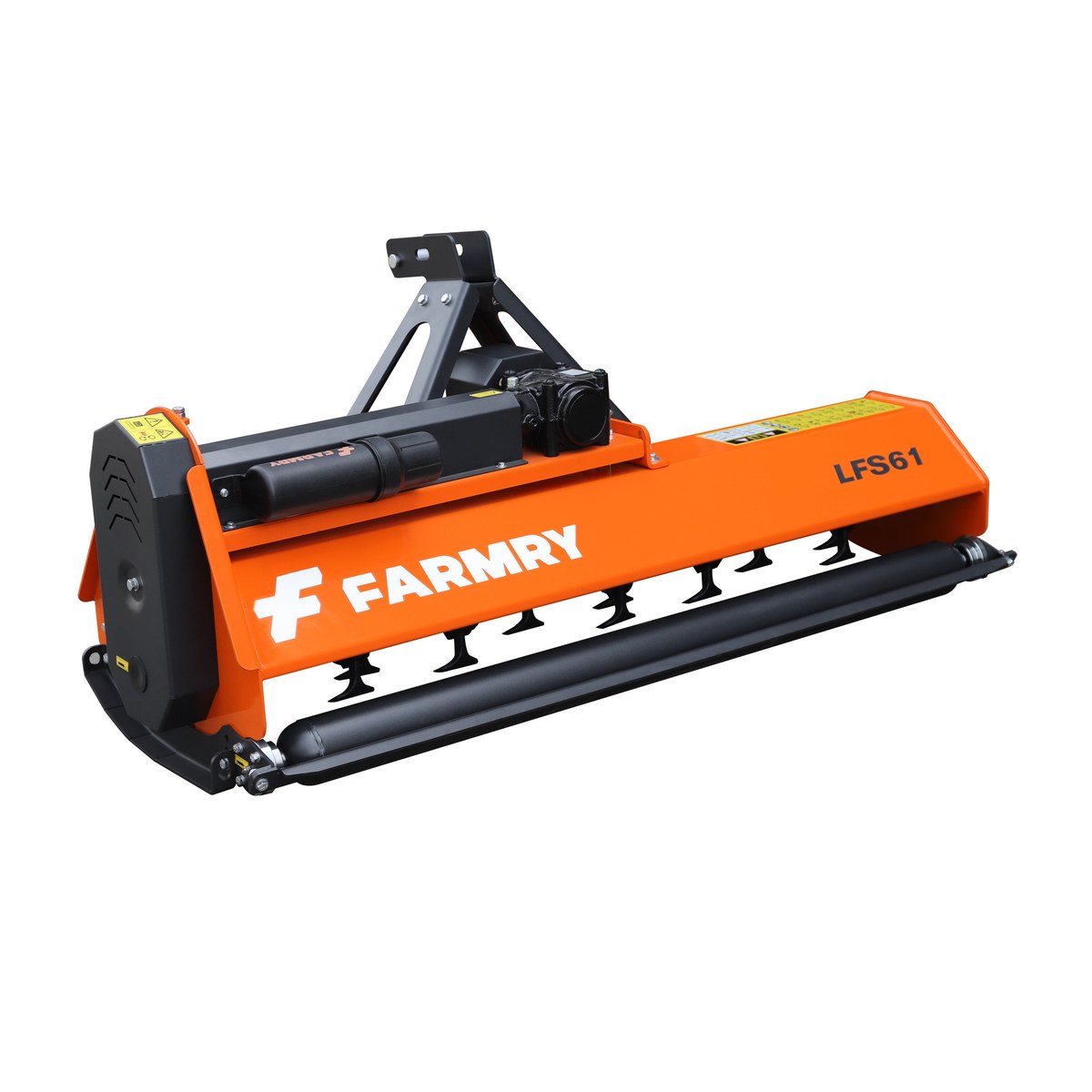
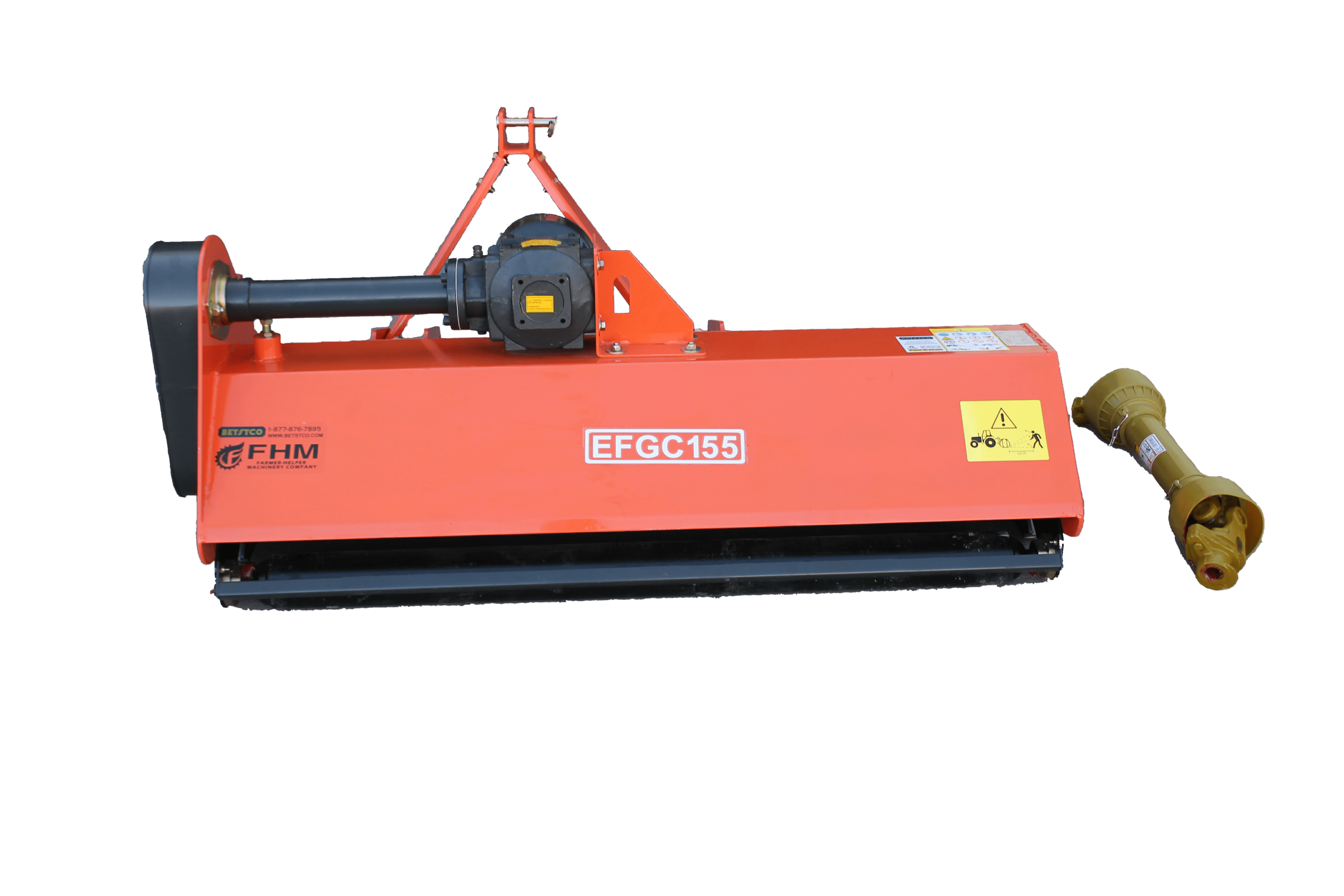
Farmry LFS61 vs Farmer-Helper FH-EFGC155: nearly the same swath, different requirements
The one-inch difference between their published cuts is less useful than the setup differences. LFS61 has a narrow published cutting-height range and a manual weight that explicitly includes the PTO shaft. FH-EFGC155 offers a broader stated height range and separately offered offset equipment, but its power, parts and weight documents need reconciliation. This comparison keeps the Betstco mower in its base hammer configuration without the hydraulic-offset kit.
By Acreage Equipment · Reviewed November 8, 2026 · Specification research, not a field test
Consider LFS61 for routine low-cut mowingShortlist LFS61 when a 61-inch swath and its published 0.76–1.79-inch height range suit the job, and the stated small-brush guidance is sufficient.
Consider FH-EFGC155 for a broader setup rangeShortlist the base hammer FH-EFGC155 when the stated 0–6-inch height range or a documented alternate blade set addresses the work.
Prices shown on the product cards retain their original check dates. This comparison does not rank total purchase cost. Obtain current itemized quotes for the exact configuration, shaft, setup and delivery. Open your saved comparison →
The differences that matter.
01
Power labels do not share a basis
LFS61: 15–35 tractor hp, with engine/PTO basis unspecified. FH-EFGC155 page: 25–65 PTO hp; its linked manual changes the minimum’s basis for hydrostatic tractors and separately gives an 80-PTO-hp ceiling.
Do not call the Farmry suitable for a smaller tractor solely by comparing 15 with 25. Get the LFS basis and reconcile the exact EFGC delivered limits, especially for a hydrostatic tractor.
LFS61 page: 0.76–1.79 inches. FH-EFGC155 page: 0–6 inches adjustable. Both have approximately five-foot cuts: 61 inches and 60 inches respectively.
For a specified stubble height above LFS61’s published range, confirm EFGC’s delivered adjustment and ground-following setup. Neither the zero setting nor the height range is advice to scalp the ground.
LFS61 manual lists 421 lb net with the PTO shaft; its page lists 509 lb shipping. FH-EFGC155 page lists 741 lb weight and 789 lb crated, while the manual lists 720 and 755 lb. EFGC’s shaft/oil-inclusive operating basis is not established.
Farmry’s shaft inclusion makes its reference more specific, but still check the complete delivered load. Do not use either crate weight as the operating load or choose one of Betstco’s conflicting figures to pass a tractor lift limit.
LFS61: 22 hammers in the current page/manual configuration. FH-EFGC155: 24 installed hammers, with 48 Y blades offered as an alternative in the manual and a blade-swap choice on the page.
This is not a hammer-versus-Y comparison: both selected products use hammers. If future grass blades matter, ask Betstco to identify the compatible complete set and procedure; no equivalent Farmry blade-conversion option is established here.
Fixed setup versus an optional hydraulic conversion
LFS61 manual marks hydraulic ram NO and gives fixed left/right edge dimensions. FH-EFGC155 is compared without its separate hydraulic-offset kit; its manual documents two hitch mounting positions, but another adjustment section describes a handle mechanism.
Neither base configuration is assumed to need a side-shift rear remote. If powered offset is a future requirement, confirm the exact EFGC kit, mechanism, permitted flow/pressure, valve and couplers before pricing it as an installed system.
LFS61 page describes shrubs and weeds up to 2 cm, approximately 0.8 inch. FH-EFGC155 page claims wooded material up to 3 inches without matching species, moisture or power conditions.
The EFGC claim is broader, but these are not comparable test results. For regular woody clearing, ask each maker to address the actual material and tractor rather than extrapolating from hammer count or mower weight.
Shortlist LFS61 when a 61-inch swath and its published 0.76–1.79-inch height range suit the job, and the stated small-brush guidance is sufficient. Confirm the unspecified 15–35-hp basis and complete tractor load assessment; its 421-lb manual reference explicitly includes the shaft.
Shortlist the base hammer FH-EFGC155 when the stated 0–6-inch height range or a documented alternate blade set addresses the work. Resolve the current-page/manual power limits, complete operating weight and delivered offset mechanism first. Treat hydraulic conversion as a separate equipment package.
LFS61 power basis remains unspecified. EFGC155 current page gives 25–65 PTO hp, while manual p23 uses PTO for gear transmissions and engine hp for hydrostatic tractors; manual p16 gives an 80-PTO-hp ceiling. A separate page paragraph refers to tractors up to 50 HP without basis.
EFGC155 current-page and manual product/crate weights disagree; neither explicitly verifies a full operating configuration.
EFGC155 main table/manual list three belts and Series 5 driveline, while Additional information says two belts and Series 4. Replacement parts and the delivered shaft require confirmation.
EFGC manual p23 identifies two mounting positions, while p20 describes side-to-side handle adjustment. The comparison does not assume a settled offset mechanism or hydraulic travel.
The linked EFGC PDF remains Revision 12-12-17; the /2025/05/ URL is an upload path, not its authored revision. Farmry’s page link label says v1.0, but the linked PDF is Rev 1.7.
Primary manufacturer pages and linked manuals were checked on November 8, 2026. Document revisions and known conflicts are kept distinct from the check date. These are specification comparisons, without physical tests or confirmed tractor pairings.
FOLLOW THE NUMBERS
Sources & documentation
Research record reviewed November 8, 2026. Confirm the current manual and the exact revision supplied with your machine.