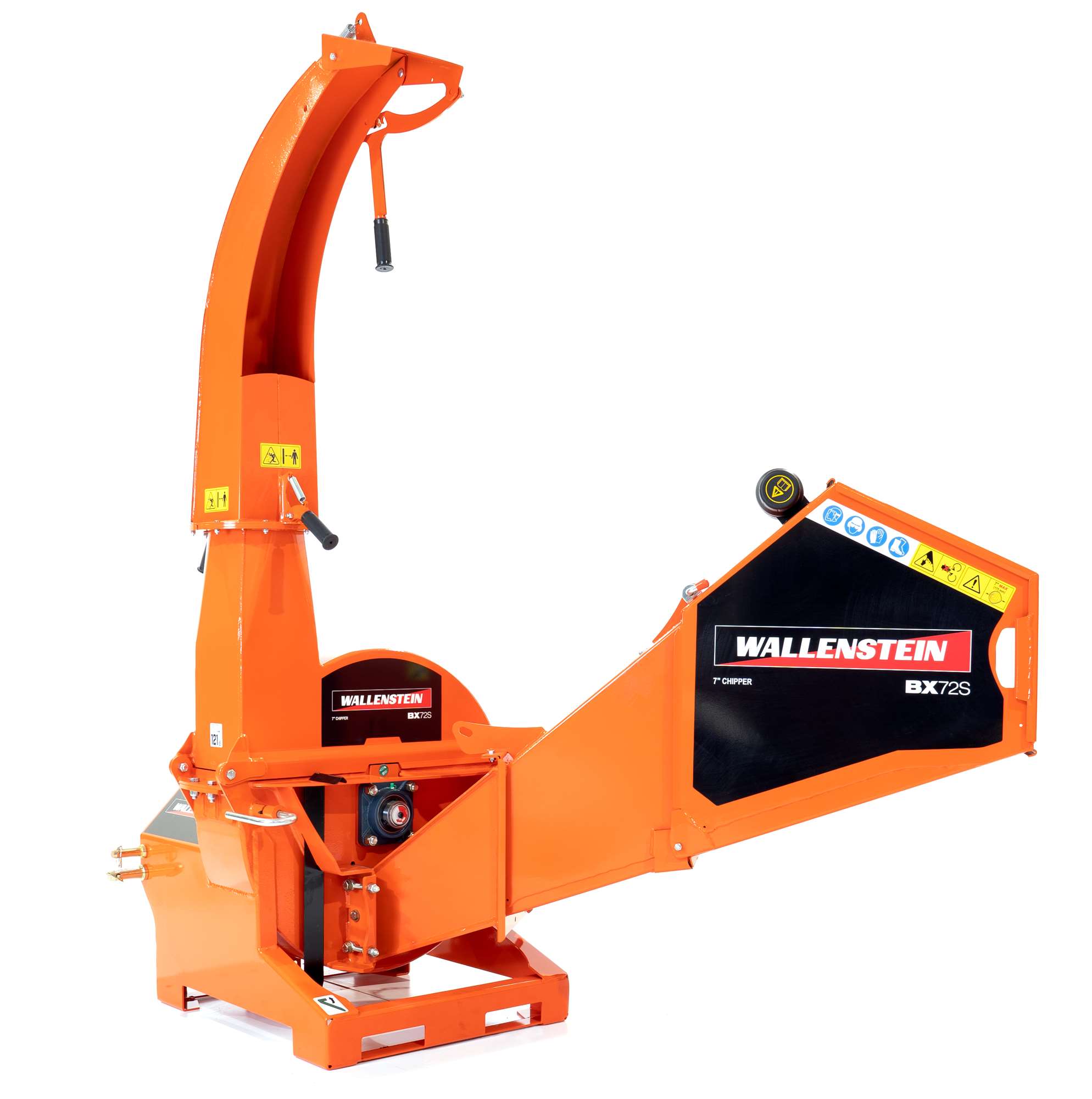
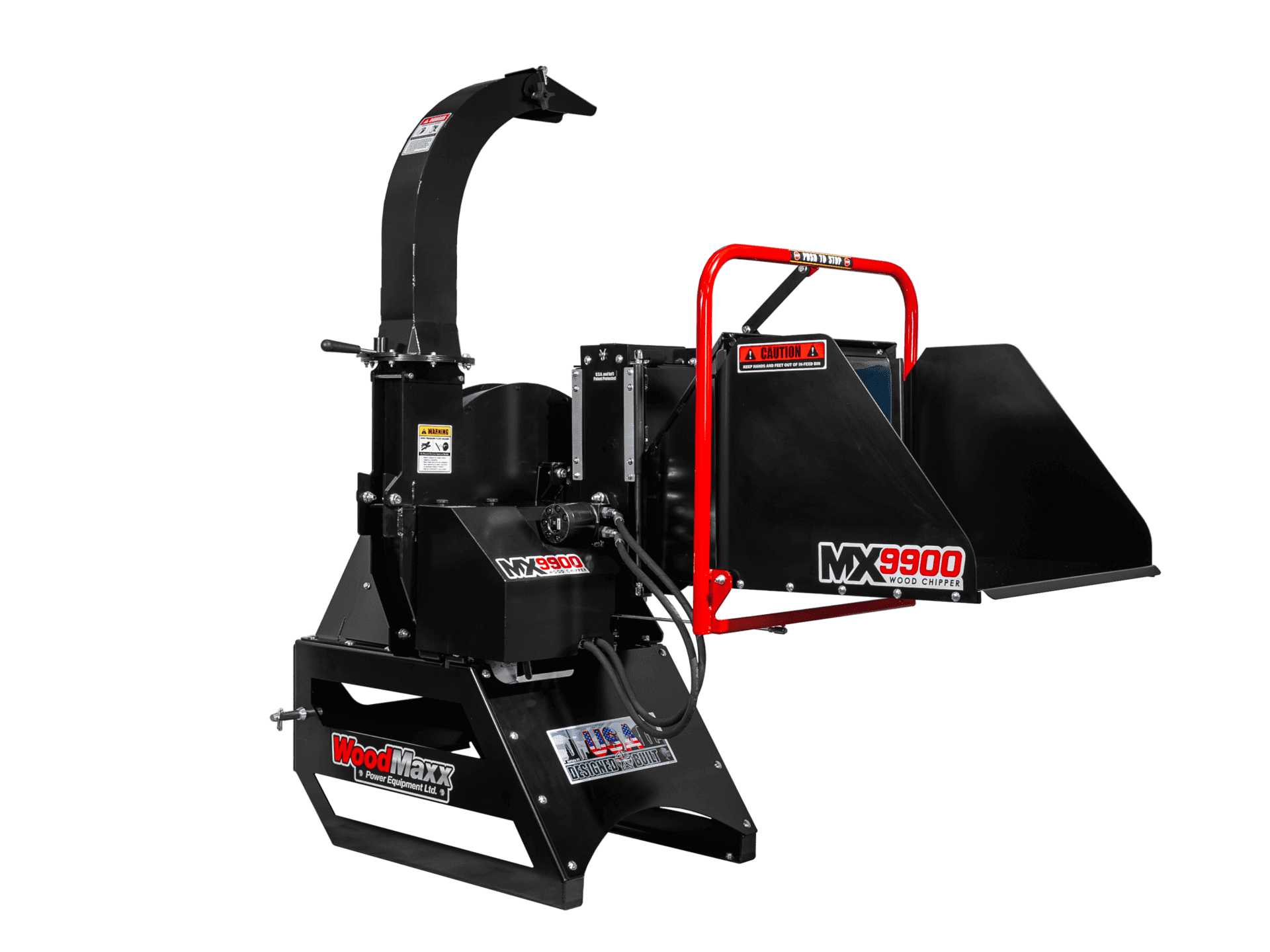
The differences that matter.
01
Opening and published diameter
BX72S: 7-inch diameter; 7×12-inch housing opening. MX-9900: up to 9-inch diameter; 9×9-inch opening.
The MX-9900 offers the larger stated diameter, but BX72S has the longer second dimension. Match actual branch geometry and conditions; do not equate nominal opening dimensions with guaranteed performance.
02
Power basis and material claims
BX72S: 50–85 engine hp; no model-specific full-capacity power condition established. MX-9900: 25 PTO hp minimum; page claims 5-inch hardwood or 7-inch softwood there, then 9-inch material at “50+ HP” with basis unstated.
The WoodMaxx statements distinguish species and power, but do not establish a universal feed-rate result. Ask what “50+ HP” means and the permitted maximum; do not turn 50 into a ceiling or infer a PTO threshold from context.
03
Feed controls
BX72S: gravity/manual feed. MX-9900: operator-controlled hydrostatic speed/direction; manual range 0–75 ft/min, reversible.
Powered reverse and feed-speed adjustment are concrete features to consider. Automatic load sensing or automatic reverse is not established for MX-9900 and is not inferred from marketing terms.
04
Feed-system service requirements
BX72S: no hydraulic feed reservoir or pump documented. MX-9900: self-contained system using conventional 10W-40 motor oil; nominal 2-quart specification.
The MX-9900’s feed system uses its own specified lubricant, not a tractor remote circuit. Confirm the delivered fill state and level instructions; capacity is not a direction to add a fixed amount blindly.
05
Speed configuration
BX72S: documented 540 or 1000 rpm input; proper shaft required. MX-9900: 540 rpm input; 1200-rpm flywheel specification.
The speeds describe different shafts. A BX72S 1000-rpm option does not justify driving MX-9900 at that input speed, and flywheel rpm alone is not a measured production comparison.
06
Mass evidence before lifting
BX72S: 728 lb Total Weight, operating inclusions unconfirmed. MX-9900: approximately 816 lb dry; 1048 lb shipping.
Neither establishes a complete shaft/oil/options operating load. Obtain comparable completed weights and actual load centers rather than claiming an 88-pound operating difference.