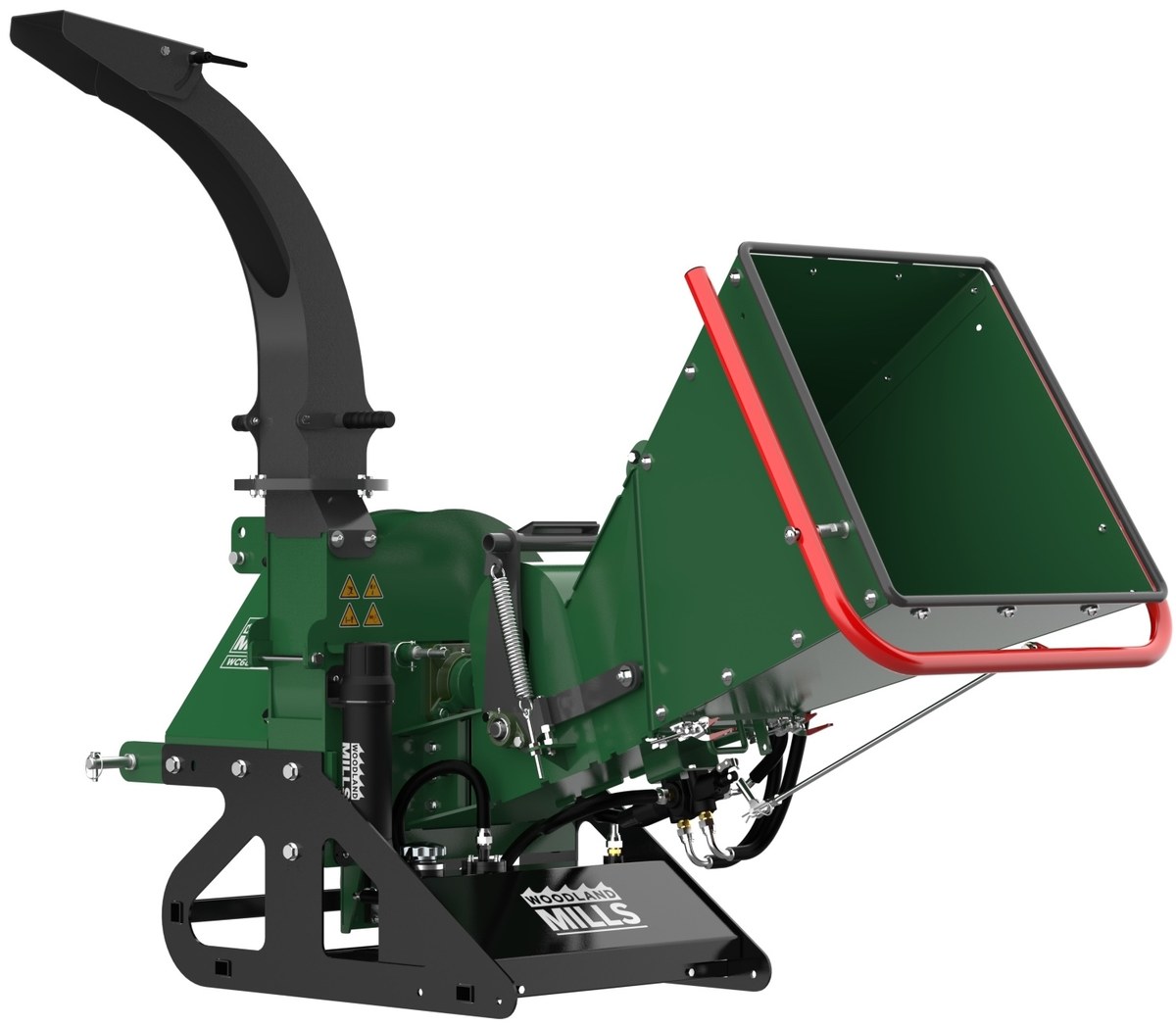
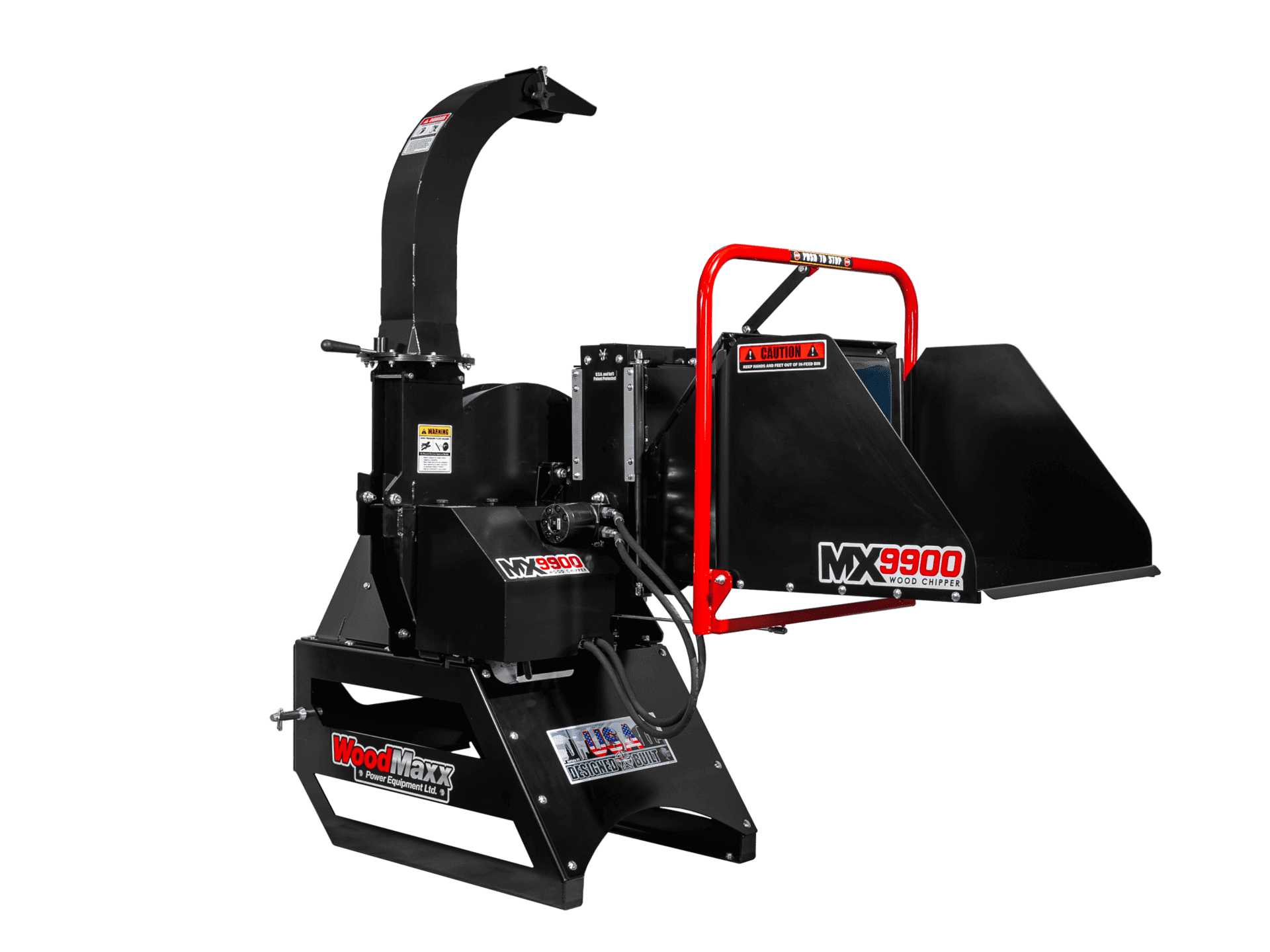
Woodland WC68 vs WoodMaxx MX-9900: capacity and delivery setup
WC68 has a 6 × 8-inch throat and a 20–50 PTO-hp range. MX-9900 has a 9 × 9-inch throat and a 25 PTO-hp minimum, with no finite maximum stated in the reviewed specifications. Both use onboard powered feed, but their full-capacity qualifications, fluids and delivery preparation differ.
By Acreage Equipment · Reviewed November 8, 2026 · Specification research, not a field test
Consider WC68 when the 6-inch class covers the materialShortlist WC68 when its throat covers the branches, the tractor falls within the confirmed 20–50 PTO-hp range and its Category 1 mounting is appropriate.
Consider MX-9900 for the larger throat or Category 2 mountingShortlist MX-9900 when a 9 × 9-inch opening or documented Category 2 mounting answers a real requirement.
Prices shown on the product cards retain their original check dates. Prices were not refreshed for this comparison, and no purchase-cost ranking is made. Request current itemized quotes for the exact configuration, shaft, setup and delivery. Open your saved comparison →
The differences that matter.
01
Minimum power is different from full-capacity power
WC68 specifies 20–50 PTO hp and requires over 40 PTO hp to chip 6-inch logs at full feed speed. MX-9900 specifies a 25 PTO-hp minimum; its page associates that power with 5-inch hardwood and 7-inch softwood, then says 50+ HP for full 9-inch capacity without repeating whether that figure is PTO or engine power.
If the tractor is near 25 PTO hp, compare the documented material conditions rather than the largest model label. Have WoodMaxx confirm the basis of 50+ HP and an applicable upper tractor limit; an unstated maximum is not unrestricted approval.
WC68 has a 6-inch diameter rating and a 6 × 8-inch throat. MX-9900 has a 9-inch rating and a 9 × 9-inch opening. Both list four reversible cutting knives.
MX-9900 is worth investigating when the actual branch pile exceeds WC68’s stated short side and the tractor meets the confirmed capacity conditions. For a pile already within WC68’s opening, the larger throat alone does not establish faster production or better chips.
Both power the feed onboard, but use different fluids
WC68 uses its own hydraulic tank and belt-driven pump, with adjustable feed speed and reverse. Its manual lists a 5.3-gallon tank volume and a separate 5-gallon pre-start fill quantity using ISO 32 or ISO 46 hydraulic oil. MX-9900 uses conventional 10W-40 motor oil in its hydrostatic feed system: 2 quarts nominal in the table and 2–2.5 quarts in its service procedure.
Neither requires a rear remote simply to run the documented feed system. Plan service supplies for the exact system and follow its fill procedure; the reservoir sizes and fluid types cannot be treated as interchangeable. Operator feed control is not evidence of automatic load sensing.
WC68’s manual includes assembly of hitch and chute components and explicitly says the machine ships without hydraulic fluid. MX-9900’s page and manual describe a fully assembled machine that needs uncrating, removal from its skid and pre-operation checks; the current description says oil is factory-filled, although other page text still describes an initial fill.
If commissioning help is limited, ask for quotes that separate machine assembly, fluid supply and tractor setup. MX-9900’s assembled delivery does not remove oil-level, fastener, shaft and control checks. WC68’s dry delivery requires the correct fluid before use.
WC68 specifies Category 1 and includes a shear-protected PTO shaft. MX-9900 specifies Category 1 or 2 and lists an included 32-inch premium shear-bolt shaft; its Category 1 quick-hitch accessories are separate.
An owner with Category 2 linkage has a documented reason to investigate MX-9900, but still needs the correct pins and geometry. Neither shaft’s included length confirms installation on a particular tractor, and Category 1 quick-hitch accessories do not establish Category 2 quick-hitch compatibility.
Dry, product and shipping weights cannot be compared as operating loads
WC68’s manual lists 747 lb product and 842 lb shipping; its current page lists 825 lb shipping. MX-9900’s manual labels its approximate 816 lb weight dry, while its page lists 1,048 lb shipping. Neither provides an unambiguous complete wet, shaft-inclusive operating load.
Confirm the final installed load for tractor planning and the separate freight load for unloading. Do not subtract 747 from 816 and treat the result as the difference behind the tractor: the fluid and equipment inclusion bases are not aligned.
Consider WC68 when the 6-inch class covers the material
Shortlist WC68 when its throat covers the branches, the tractor falls within the confirmed 20–50 PTO-hp range and its Category 1 mounting is appropriate. Budget for assembly and hydraulic fluid, and do not promise full-speed 6-inch chipping from the 20-hp minimum.
Consider MX-9900 for the larger throat or Category 2 mounting
Shortlist MX-9900 when a 9 × 9-inch opening or documented Category 2 mounting answers a real requirement. Resolve the 50+ HP full-capacity basis and upper power limit, then review complete operating mass, the exact hitch package and factory-fluid status.
MX-9900’s minimum is explicitly PTO horsepower, but its 50+ HP full-capacity phrase does not repeat the basis, and no finite maximum is established. WC68’s over-40-PTO-hp full-feed condition is separate from its 20-hp minimum and 50-hp maximum.
WC68’s page describes an 8.25-inch roller and 23 × 27-inch hopper; manual p9 gives 7-7/16 inches at the roller tooth tip and a 27-1/8 × 26-1/16-inch chute. MX-9900’s page gives an 8.25-inch roller, 175 lb spring force and a 225 lb flywheel, versus 8 inches, 120 lb and approximately 220 lb in its manual. Measurement bases or revisions need confirmation; these figures are not used to rank feeding force or performance.
MX-9900’s current assembly description says oil is factory-filled, while other page text describes an initial fill. Its nominal 2-quart table entry and 2–2.5-quart service instruction must retain their distinct labels. WC68’s 5.3-gallon tank volume and 5-gallon pre-start fill quantity likewise describe different quantities.
WC68’s shipping weight is 825 lb on the page versus 842 lb in the manual. Its 747 lb product entry does not establish complete wet operating mass, and MX-9900’s approximately 816 lb is expressly dry. Shipping or dry figures are not substituted for installed operating load.
Official product pages and current manual links were reviewed on November 8, 2026. Manual references are WC68 Rev C, May 28, 2024, and MX-9900 Rev C, September 18, 2026. Capacity, fluid and weight labels are kept distinct where the sources differ.
FOLLOW THE NUMBERS
Sources & documentation
Research record reviewed November 8, 2026. Confirm the current manual and the exact revision supplied with your machine.