THE ACREAGE EQUIPMENT FIELD GUIDE
Dry vs. fresh wood: which chipper capacity applies?
A chipper’s largest advertised diameter may apply only to a particular material and power condition. Before comparing machines, record whether your wood is fresh or dry, its species if known, and the diameter you handle most often. A condition-matched capacity statement is more useful than a large number detached from its qualifications.
By Acreage Equipment · Reviewed November 7, 2026 · Specification research, not a field test
THE DECISION IN NUMBERS
Worked material check: compare like conditions before comparing diameters
Original hypothetical examples compared with manufacturer statements checked November 7, 2026. WCAP5 rows use its explicit dry/fresh limits. WM-8H rows compare the maker’s capacity examples at exactly 19 PTO hp; they are not independent test results, throughput forecasts or a replacement for the full manual. Other suitability checks remain.
Scroll the table sideways on smaller screens.
| Example material | Model and stated condition | Comparison | Limited conclusion |
|---|---|---|---|
| 4.5-inch dry branch | WCAP5: up to 4-inch dry | 4.5 − 4 = 0.5 inch over | Above the published dry diameter limit |
| 4.5-inch fresh branch | WCAP5: up to 5-inch fresh/wet | 5 − 4.5 = 0.5 inch below | Within this diameter condition only |
| 4.5-inch branch; condition unknown | WCAP5: separate 4 / 5-inch limits | Applicable row is unresolved | Confirm condition; do not default to the larger claim |
| 5-inch hardwood at 19 PTO hp | WM-8H: 4-inch hardwood example | 5 is above the stated 4-inch example | No matching low-power capacity claim established |
| 5-inch softwood at 19 PTO hp | WM-8H: 6-inch softwood example | 5 is below the stated 6-inch example | Within that claimed size; species/condition still need confirmation |
The same diameter can produce a different buying decision
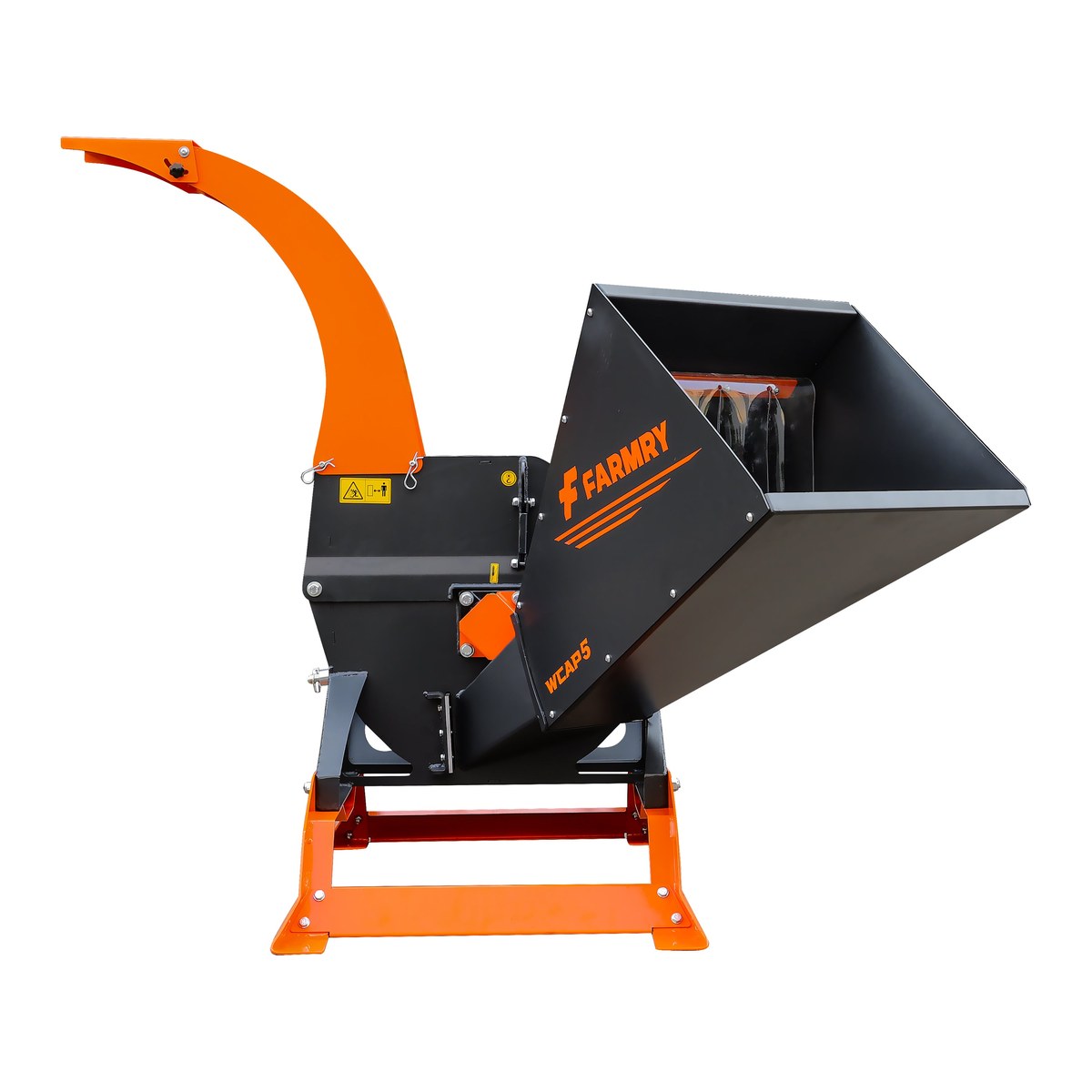
Farmry specifies up to five inches for fresh or wet wood on WCAP5, but four inches for dry wood. A hypothetical 4.5-inch dry branch is therefore half an inch above its published dry limit; the same diameter of fresh wood is half an inch below the fresh limit. The second comparison clears only the diameter-and-condition check. It does not settle branch shape, species, power or setup. Do not turn this model’s one-inch difference into a universal reduction for other chippers.
Hardwood and softwood are a separate condition from fresh and dry
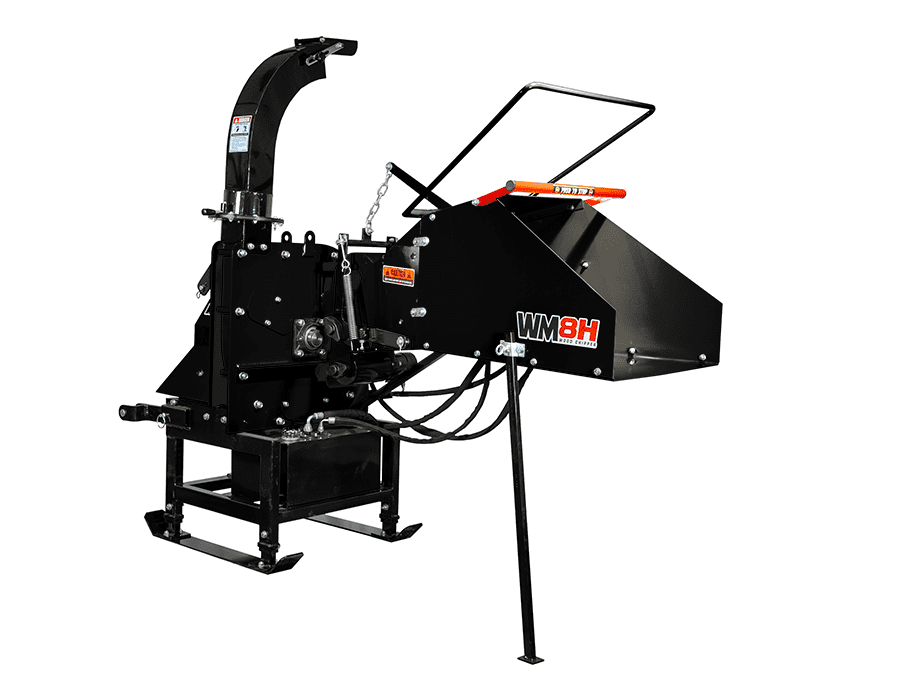
WoodMaxx describes WM-8H and WM-8M capacity at 19 PTO hp as four-inch hardwood or six-inch softwood. That statement distinguishes material groups; it does not provide a fresh-versus-dry table for each group. A buyer with five-inch hardwood therefore does not have a matching low-power capacity claim just because the machine is labeled eight inches. Ask about the actual species and condition. Do not combine Farmry’s dry-wood difference with WoodMaxx’s numbers to invent an unreported capacity.
Keep every qualification attached to a full-size claim
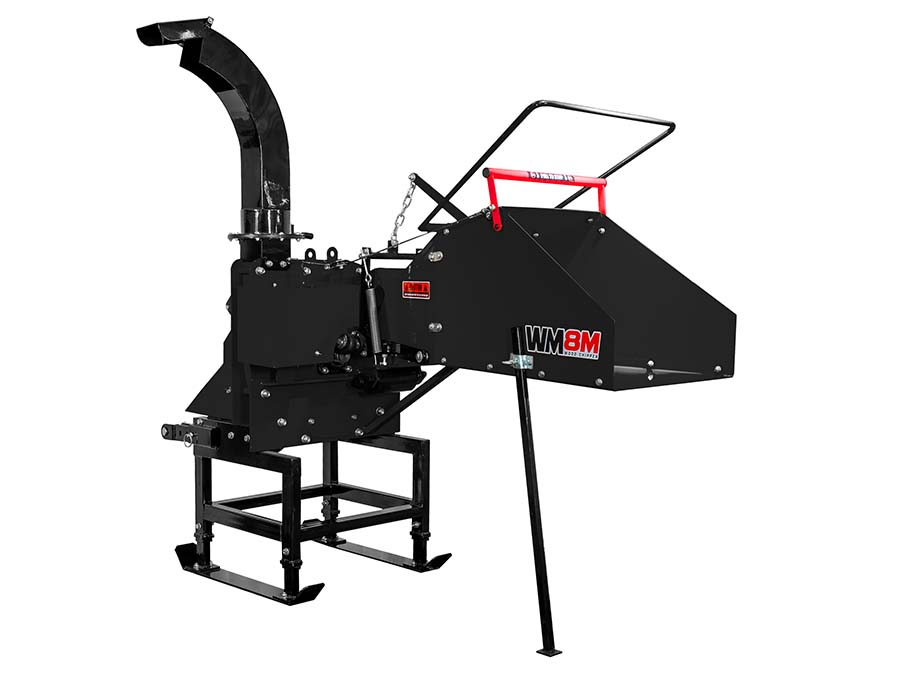
WoodMaxx’s WM-8M product introduction associates full eight-inch material with 50+ PTO hp. Its customer FAQ is more specific: the eight-inch example is softwood at 50+ PTO hp. That narrower statement should remain visible when the intended work includes large hardwood. Neither statement is a maximum permitted tractor-power rating or a measured throughput guarantee. Intermediate tractor power also does not establish an intermediate diameter by interpolation.
Fresh woody branches are not the same order brief as wet vegetation
Farmry’s material guide distinguishes fresh woody branches from soft, leafy or fibrous material. A fresh/wet branch rating should therefore not be read as approval for every kind of wet garden waste. If most of the job is leaves, vines or other vegetation, name that material in the inquiry and ask whether the exact machine is intended for it. Its diameter label alone does not answer that question.
Ask for a condition-matched answer before selecting the machine
Send the maker your typical and largest diameters, species if known, fresh/dry condition, material photos, and tractor specifications. Keep the horsepower bases separate: Farmry’s WCAP5 FAQ states 15–45 engine hp, while the cited WoodMaxx material examples use PTO hp. Unknown wood condition or species remains a question for the maker, not permission to select the most generous number. Geometry and feed controls are separate comparisons once the intended material is established.
Take these questions with you.
- For my typical species, fresh/dry condition and tractor PTO output, which published diameter statement applies to this exact chipper?
- Does your full-size claim include this material and condition, or only a softer or fresher example?
- If the job includes leafy or fibrous vegetation as well as woody branches, is this model intended for all of those materials?
Keep these questions with your exact tractor and attachment details.
Use these questions in my seller briefFOLLOW THE NUMBERS
Sources & documentation
Research record reviewed November 7, 2026. Confirm the current manual and the exact revision supplied with your machine.
- Farmry WCAP5 product FAQ — fresh/dry capacity and engine-horsepower basis
- Farmry green-versus-dry wood guide — fresh woody branches and wet vegetation are different materials
- WoodMaxx WM-8H introduction — species-group and PTO-dependent capacity claims
- WoodMaxx WM-8M introduction — stated capacity at 19 and 50+ PTO hp
- WoodMaxx customer FAQ — the WM-8M full-size example specifies softwood
- Farmry WCAP5 operator manual, Rev 1.5 — Printed pp19–20 specifications; pp30–34 driveline checks
- WM-8H linked manual — assembly p20 and maintenance p29 give different fill quantities
- WoodMaxx current manual index
- WM-8M manual linked by current WoodMaxx manual index