THE ACREAGE EQUIPMENT FIELD GUIDE
Chipper feed rate vs. throughput: what can estimate job time?
A faster-looking specification does not necessarily tell you how soon a brush pile will be cleared. Feed speed measures movement into the machine; processing volume measures an amount of material over time. Maximum branch diameter answers a third question. Compare those labels separately before asking a seller for a time estimate tied to your job.
By Acreage Equipment · Reviewed November 7, 2026 · Specification research, not a field test
THE DECISION IN NUMBERS
Worked rate check: preserve the unit and the time boundary
Manufacturer claims checked November 7, 2026; they are not independently measured outputs. The last two rows use invented lengths, rates and delays to explain arithmetic, not recommend operation or predict any model’s productivity.
Scroll the table sideways on smaller screens.
| Claim or example | What it measures | What can be concluded | Still needed |
|---|---|---|---|
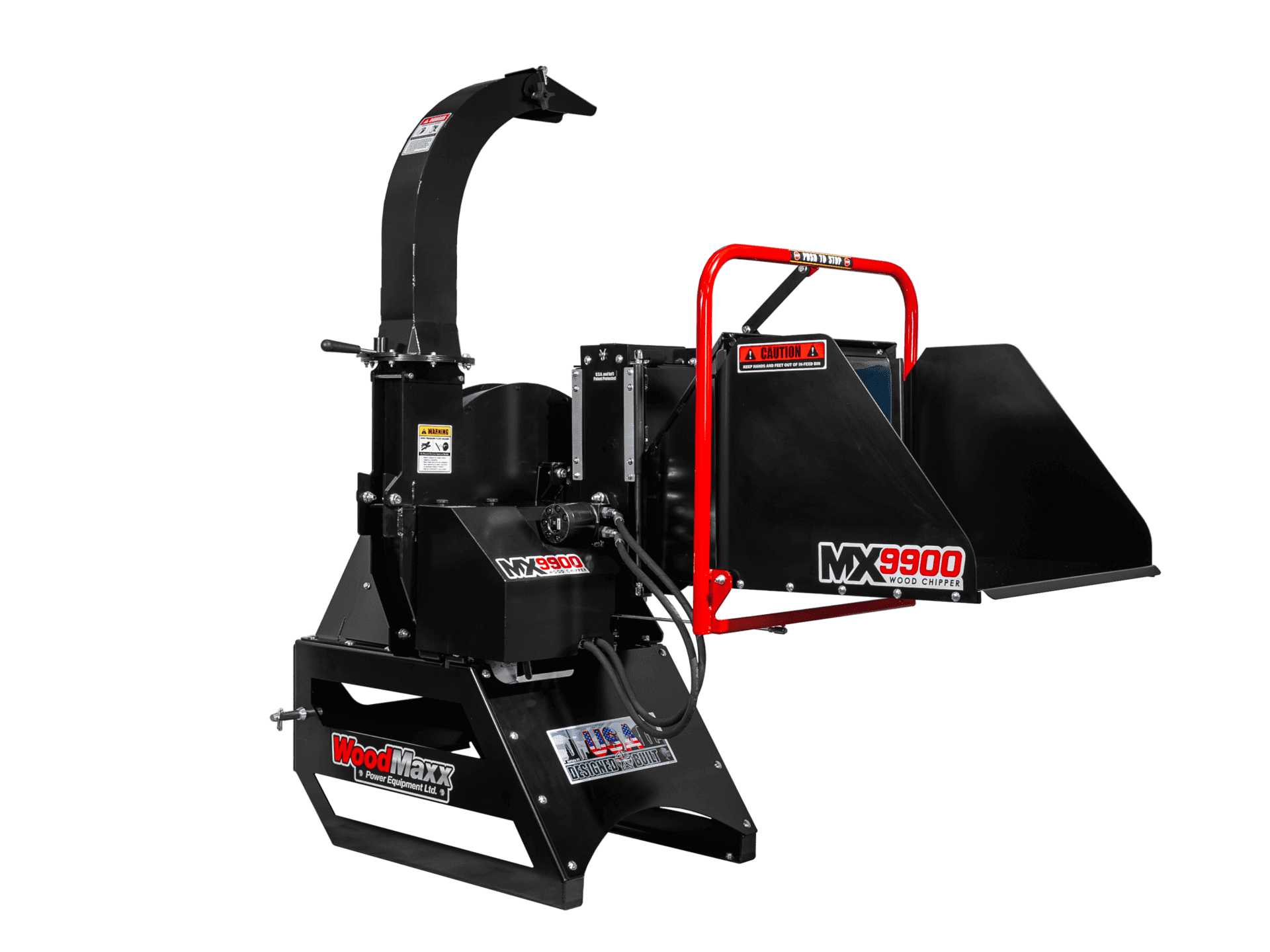
| MX-9900: 0–75 ft/min | Linear feed rate | A speed range is published | Volume basis and elapsed job-time evidence |
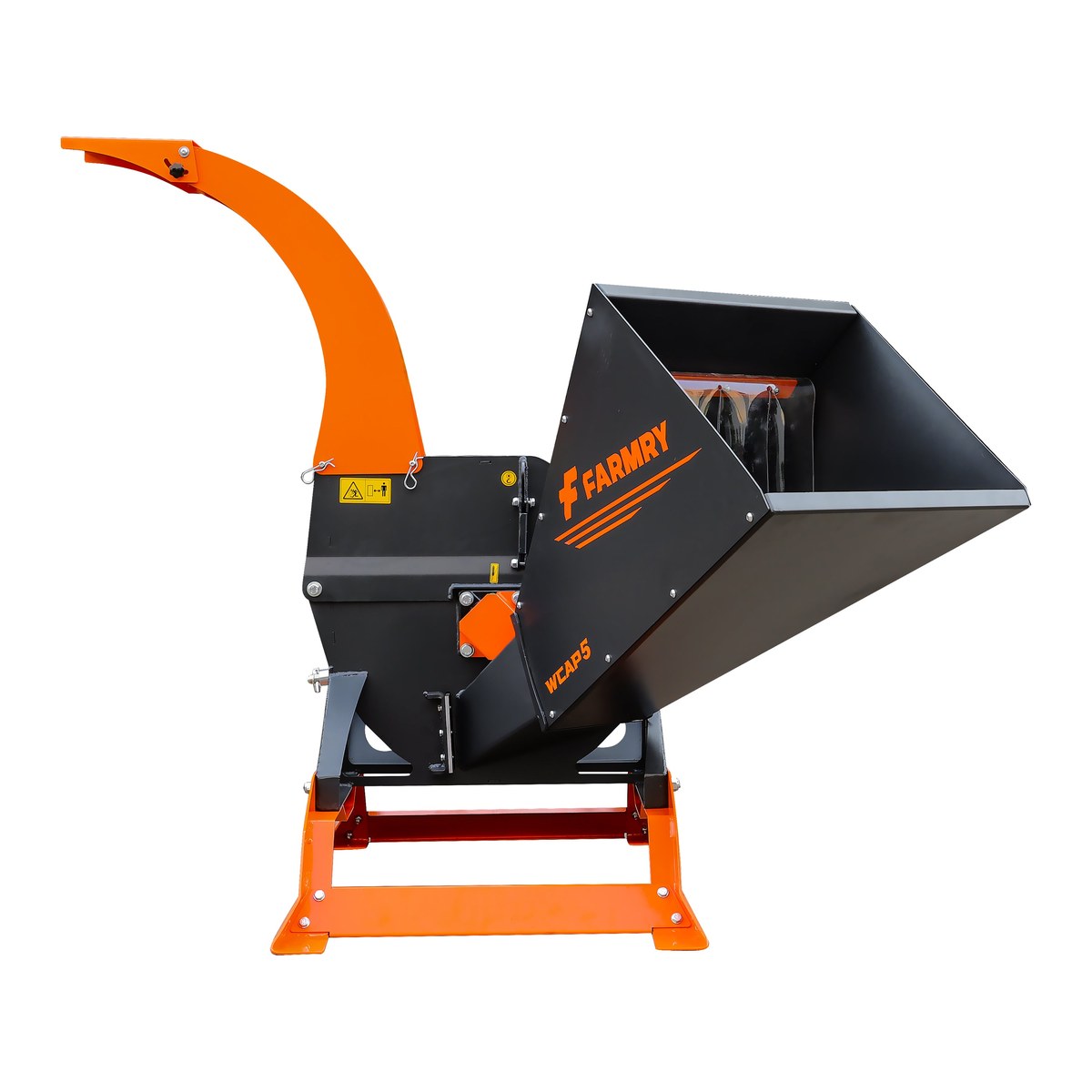
| WCAP5: 141–282 ft³/hour | Published processing-volume rate | Units differ from ft/min | Definition of volume and test conditions |
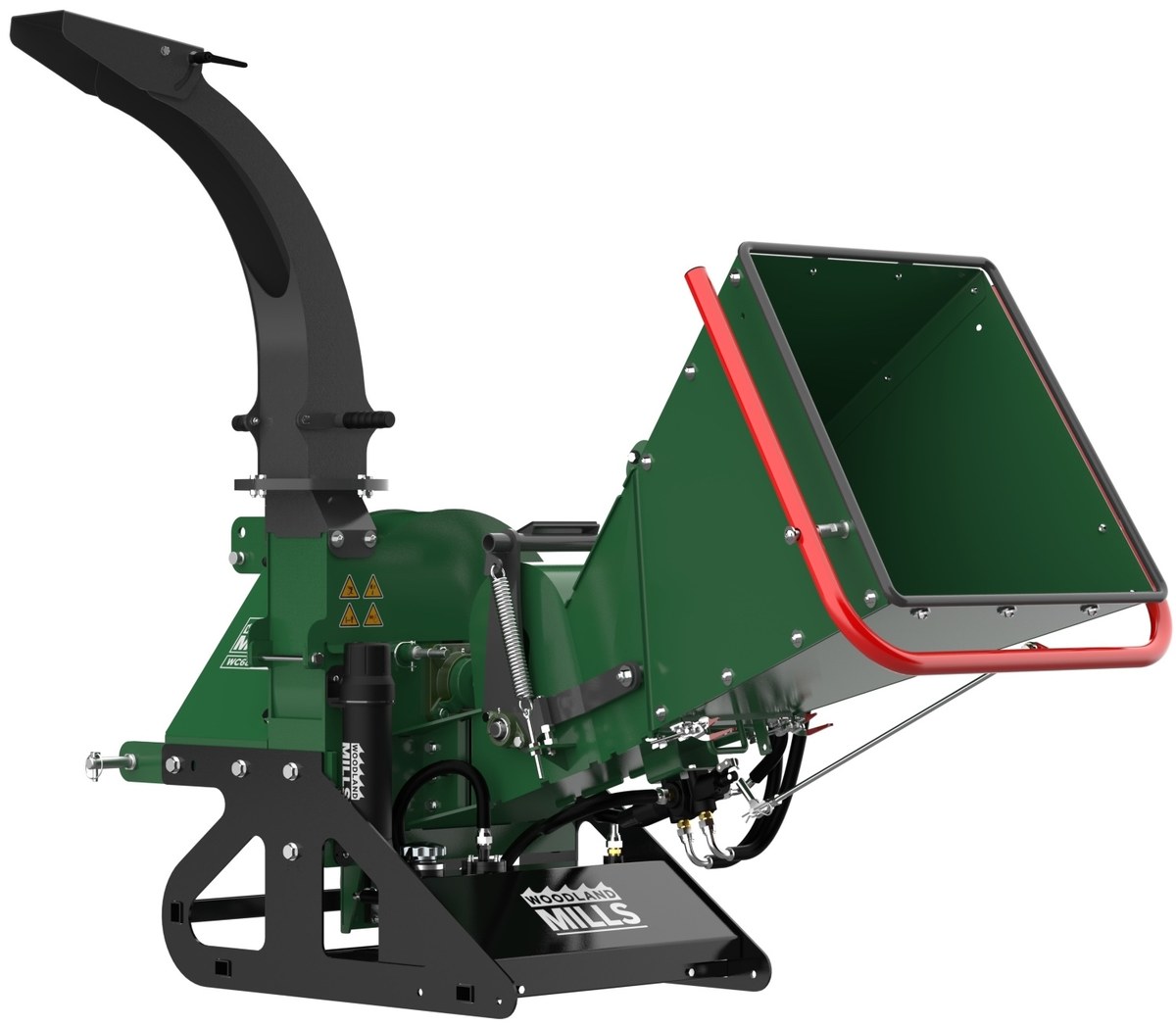
| WC68: full 6-in logs at full feed | Specific combined claim | Requires over 40 PTO hp per maker | Actual rate for other tractor/material conditions |
| Hypothetical: 12 ft at 24 ft/min | Uninterrupted travel | 12 ÷ 24 = 0.5 min = 30 sec | All non-travel time remains excluded |
| Hypothetical: 60 pieces; 30 sec travel + 30 sec other work each | An invented complete cycle | 60 × 60 sec = 60 min | Actual cycle times require evidence |
Sources for this decision table (4)
- WoodMaxx MX-9900 — feed-rate unit and separately qualified capacity claims ↗
- WoodMaxx MX-9900 Rev C manual, September 18, 2026 — p. 42 feed-rate specification ↗
- Farmry WCAP5 — processing capacity per hour, gravity feed and stated material conditions ↗
- Woodland Mills WC68 — power condition for maximum diameter at full infeed speed ↗
Keep linear feed speed in its own column
The MX-9900 page and current manual list a feed rate of 0–75 feet per minute. That describes a linear rate, not cubic feet of wood or finished chips per hour. It also does not establish that the largest advertised branch can travel continuously at the top rate under every power condition. Preserve the unit and the claim’s scope when comparing it with another machine.
Ask what a cubic-foot claim measures
Farmry lists WCAP5 processing capacity as 141–282 cubic feet per hour and identifies gravity feed. The reviewed specification does not state whether that volume means solid input wood, loose brush or discharged chips. Those are different measurement bases. A pile’s outside dimensions are not automatically comparable with the published rate. Request the volume definition, material and timing method before dividing a pile estimate by that number.
Do not combine separate maximum figures
Woodland states that WC68 accepts a 20–50 PTO-hp tractor range, but full six-inch logs at full infeed speed require over 40 PTO hp. A hypothetical 30-PTO-hp tractor is inside the general range without meeting that particular full-diameter/full-feed condition. This does not tell us its achievable rate. Keep diameter, feed speed, material and power conditions together when requesting a production example; engine hp cannot replace a stated PTO-hp condition.
Use simple arithmetic to expose what is missing
Imagine a 12-foot piece moving continuously at an assumed 24 feet per minute. The travel time is half a minute, or 30 seconds. For 60 such pieces, that is 30 minutes of hypothetical travel. If each cycle also includes an invented 30 seconds of other work, elapsed time becomes 60 minutes. Neither speed nor delay is a recommendation or machine test. The difference shows why travel time alone cannot schedule a job.
Request a timed example with a defined start and finish
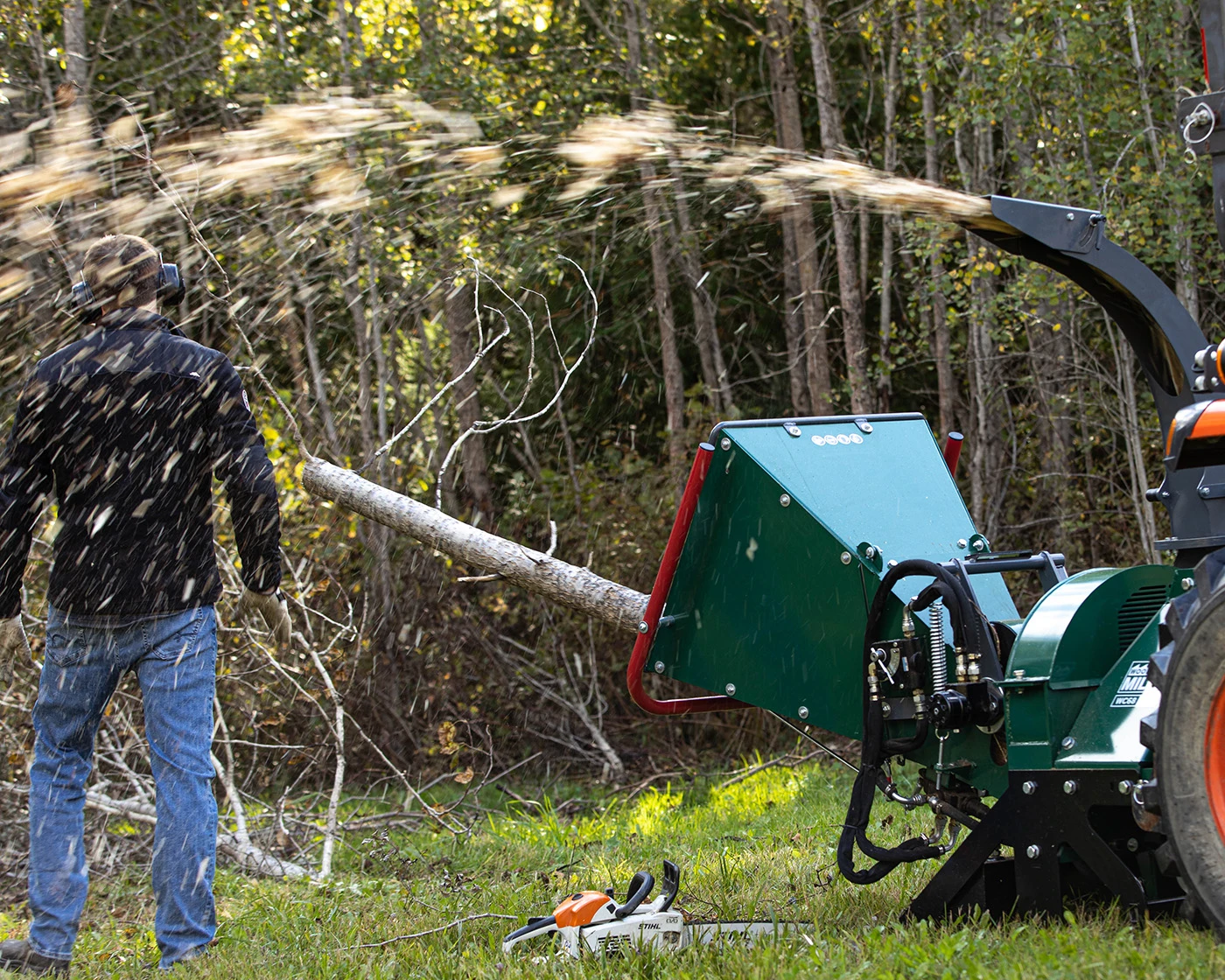
Ask whether a quoted production figure measures only cutting time or includes material preparation, movement between piles and chip handling. Describe typical piece length and diameter, species and condition, and how the material is presented. A demonstration dominated by straight, prepared pieces does not document your mixed pile’s elapsed time. Seek a comparable manufacturer example with its actual tractor PTO output and stated exclusions; leave completion time unknown when those details are missing.
Use the estimate to refine the shortlist
Put your job description and timing questions into the product’s seller brief. For a deadline-sensitive purchase, ask each supplier to address the same work description and measurement basis. Compare feed controls, capacity and requirements, then assess production evidence separately. If neither supplier supports an elapsed-time estimate for that work, the larger headline number does not resolve the purchase decision.
Take these questions with you.
- Does the quoted rate measure linear feed, solid input wood, loose brush or produced chips, and how was that quantity measured?
- What material, diameter distribution, tractor PTO output and feed conditions support the rate, and can those conditions occur together?
- Does the timing include preparation and chip handling, and what start/finish points and exclusions were used?
- For my described work, what comparable timed evidence can you provide, and which parts of a completion estimate remain unknown?
Keep these questions with your exact tractor and attachment details.
Use these questions in my seller briefFOLLOW THE NUMBERS
Sources & documentation
Research record reviewed November 7, 2026. Confirm the current manual and the exact revision supplied with your machine.
- WoodMaxx MX-9900 — feed-rate unit and separately qualified capacity claims
- WoodMaxx MX-9900 Rev C manual, September 18, 2026 — p. 42 feed-rate specification
- Farmry WCAP5 — processing capacity per hour, gravity feed and stated material conditions
- Woodland Mills WC68 — power condition for maximum diameter at full infeed speed
- Farmry WCAP5 operator manual, Rev 1.5 — Printed pp19–20 specifications; pp30–34 driveline checks
- Woodland Mills WC68 operator manual, Rev C, 28-May-2024 — Printed p9 product/shipping weights; p12 Cat 1 and PTO range; operation/setup sections
- WoodMaxx current manufacturer manual index